Coin Iconography Shifts as Evidence of Political Legitimacy Repair
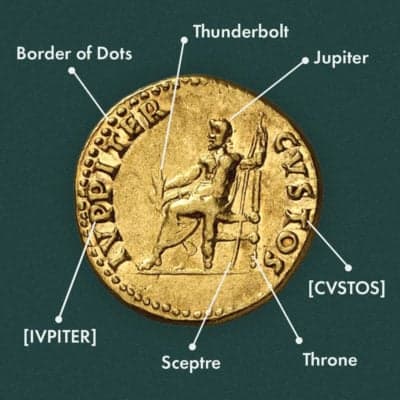
Sometimes a ruler changes the picture on the coin because the old picture has stopped doing its job.
A coin is tiny.
Ridiculously tiny, sometimes.
And yet rulers have spent thousands of years putting enormous political arguments onto those little pieces of metal.
A face says:
I rule.
A god says:
I am legitimate.
A victory says:
I won.
A symbol says:
This is who we are.
A title says:
You should recognize my authority.
And because coins travel through ordinary economic life, these messages can reach people far beyond palaces.
That makes coin iconography politically fascinating.
But it also creates a dangerous temptation.
Every time a ruler changes an image, we want to tell a story.
"Crisis!"
"Propaganda!"
"Legitimacy problem!"
Sometimes that may be correct.
Sometimes the new image really was an attempt to rebuild political credibility after defeat, succession conflict, civil war, conquest or dynastic uncertainty.
But iconographic change can also happen because of artistic fashion, religious developments, administrative reform, mint practice or simple dynastic succession.
So the serious question is not:
"Did the ruler change the coin image?"
It is:
"Did the iconographic change form part of a broader attempt to repair or reinforce political legitimacy?"
That is much harder.
And much more interesting.
Why put political messages on money?
Because money travels.
A monument stays somewhere.
A palace stays somewhere.
A royal inscription might be seen by relatively few people.
A coin can cross an enormous territory.
It enters:
markets,
military camps,
tax payments,
ports,
workshops,
farms,
temples,
households.
The ruler's image therefore becomes part of everyday economic life.
You don't need to visit the capital to encounter the regime.
The regime can arrive in your hand.
That's an extraordinary political technology.
The portrait is not just a portrait
Ancient rulers understood that appearance could communicate.
A portrait might emphasize:
youth,
strength,
maturity,
divinity,
military authority,
dynastic continuity,
ancestry.
But the meaning is contextual.
A young ruler may want to appear vigorous.
An elderly ruler may emphasize divine attributes.
A new dynasty may imitate the imagery of a respected predecessor.
A conqueror may preserve the defeated kingdom's monetary iconography rather than immediately replacing it.
Each decision can tell us something.
But none should be interpreted alone.
What does "legitimacy repair" actually mean?
Let's define it carefully.
Political legitimacy is the perceived rightfulness or acceptability of authority.
"Repair" implies that something has weakened that acceptance.
Perhaps:
a ruler inherited power unexpectedly,
a dynasty replaced another,
a civil war divided elites,
a foreign conquest disrupted authority,
a military defeat damaged prestige,
succession became contested,
or an unpopular policy weakened political confidence.
The ruler then has a problem.
How do you convince people that the new political order is legitimate?
Coins are one possible tool.
The first clue is timing
Suppose a ruler experiences a major political crisis.
Two years later, coin iconography changes dramatically.
Interesting.
Now suppose the new iconography directly references:
an ancestral dynasty,
a victorious deity,
a traditional symbol of sovereignty,
a local civic identity,
or a military victory.
The temporal relationship becomes more suggestive.
Not proof.
But suggestive.
Chronology is what turns an interesting coincidence into a testable hypothesis.
The second clue is direction
Not every image sends the same political message.
Suppose a new ruler adopts imagery strongly associated with a previous legitimate dynasty.
That could be a claim of continuity.
Another ruler might emphasize a military deity after a civil conflict.
That could reinforce martial authority.
Another might introduce local religious imagery after conquering a new territory.
That could help integrate local elites.
The interpretation depends on the image's political vocabulary.
The third clue is audience
Who needed convincing?
This is often overlooked.
A ruler might use one image across the entire empire.
But perhaps different regions receive different coin types.
That is fascinating.
Maybe the central regime is adapting its political messaging to local populations.
Imagine:
Region A: traditional imperial symbols.
Region B: local deity.
Region C: dynastic imagery.
Now the coinage becomes a map of political communication.
The question isn't merely:
"What did the ruler want people to think?"
It becomes:
"Which people did the ruler think needed to be persuaded?"
The Roman example
Roman coinage is an enormous laboratory for this.
Imperial coin types frequently communicated military victories, divine associations, dynastic relationships, public works and political ideals.
The imagery could change rapidly during moments of political transition.
That does not mean every new reverse was a response to a legitimacy crisis.
But it demonstrates how coinage could be deliberately incorporated into imperial messaging.
A ruler could announce victory, emphasize continuity, celebrate succession or associate the regime with divine protection through imagery circulating throughout the empire.
The coin was simultaneously money and political communication.
But propaganda is not the same as legitimacy repair
This distinction matters.
A ruler can issue propaganda when perfectly secure.
Political messaging is not automatically evidence of political weakness.
A powerful ruler may advertise victories precisely because things are going well.
So if we're specifically testing legitimacy repair, we need evidence that legitimacy was under pressure.
That might come from:
succession disputes,
civil conflict,
rival claimants,
abrupt dynastic transition,
rebellion,
military defeat,
contested territorial control,
or contemporary textual evidence of political instability.
Then the iconographic change becomes more meaningful.
The imitation test
One of the most fascinating forms of political communication is imitation.
Imagine a new ruler adopts the portrait conventions of a famous predecessor.
Why?
Perhaps because that predecessor represents a period of stability.
Or because the new ruler wants to inherit the predecessor's symbolic authority.
Or because merchants already trust the familiar coin design.
Or because the mint is simply copying an established type.
Again, multiple explanations.
But when imitation appears immediately after a contested succession, it becomes particularly interesting.
The ruler may be saying:
"I am not a break from legitimate authority. I am its continuation."
That is political messaging through metal.
Iconography can repair continuity
Imagine a dynasty collapses.
A new family takes power.
Suddenly the new ruler's coins emphasize traditional religious symbols rather than introducing radically new imagery.
Why?
One possibility:
continuity.
The message becomes:
"Yes, the ruler has changed.
But the world you recognize has not."
This can be politically useful after disruption.
People may accept a new political authority more easily if familiar symbols remain.
The coin becomes a bridge between old and new regimes.
Or the opposite can happen
Sometimes a ruler needs to communicate rupture.
A new dynasty might deliberately introduce new imagery.
New symbols.
New titles.
New gods.
New political vocabulary.
The message becomes:
"The old order is finished."
That can also be legitimacy-building.
Legitimacy does not always come from continuity.
Sometimes it comes from convincing people that a new order deserves authority.
Religious imagery is especially complicated
Suppose a ruler suddenly introduces a particular deity onto coinage.
Was this legitimacy repair?
Maybe.
But perhaps the deity simply became more politically important.
Maybe the ruler personally favoured the cult.
Maybe the city where the coin was minted had strong religious traditions around that deity.
Maybe the imagery had a military meaning.
Maybe it was inherited from an older coin type.
This is why iconographic interpretation needs local context.
A symbol cannot be interpreted using a universal dictionary.
The methodology: treat imagery as a hypothesis
Here's how I'd investigate a suspected legitimacy-repair episode.
Step 1 — Establish the iconographic change
What exactly changed?
Portrait?
Deity?
Symbol?
Inscription?
Titles?
Reverse composition?
Step 2 — Date it tightly
When did the old type disappear?
When did the new type appear?
How quickly?
Step 3 — Identify the political context
Was there:
succession conflict?
civil war?
conquest?
rebellion?
dynastic replacement?
military defeat?
Step 4 — Identify the symbolic meaning
What did the new imagery traditionally communicate?
Step 5 — Identify the audience
Was the imagery local, regional or empire-wide?
Step 6 — Compare other media
Did inscriptions, monuments or official texts use similar messaging?
Step 7 — Test mundane explanations
Could this simply be an artistic or minting change?
Only after this sequence should "legitimacy repair" become a serious interpretation.
One of the strongest signals is convergence
Imagine:
A ruler survives a succession crisis.
Then:
coin portraits become more dynastically explicit,
ancestral symbols return,
inscriptions emphasize lineage,
monuments celebrate continuity,
and the new coin types spread rapidly across the contested territory.
Now the interpretation becomes powerful.
The coin is not alone.
It is participating in a broader political communication campaign.
That is the evidence we want.
Geographic variation can reveal political strategy
Suppose the same ruler issues different imagery in different regions.
This is potentially fascinating.
Maybe the ruler is speaking differently to different populations.
One region receives local religious symbols.
Another receives military imagery.
Another receives dynastic continuity.
This could indicate a flexible legitimacy strategy.
But again, we need to know whether the variation reflects politics or simply decentralized minting practices.
That means comparing:
die styles,
inscriptions,
metal,
weight,
mint organization,
and chronology.
What about debasement?
This is where monetary evidence can become even richer.
Imagine a ruler changes iconography while simultaneously altering the silver content of coins.
Now two dimensions of monetary policy have changed:
what the coin says
and
what the coin contains.
Could the ruler be under fiscal pressure?
Could war have strained the treasury?
Could monetary reform be part of broader state reconstruction?
Possibly.
But don't automatically turn debasement into proof of political crisis.
Metallurgical evidence can have many causes.
The point is that combining monetary composition with imagery creates a more complete picture of state behaviour.
Sometimes the absence is revealing
Suppose a new ruler takes power but does not immediately change the imagery.
That can be meaningful too.
Perhaps continuity was politically valuable.
Perhaps the new ruler wanted to avoid emphasizing the succession.
Perhaps the existing coinage was trusted and commercially useful.
Or perhaps the regime simply did not care enough to change it.
Absence of iconographic innovation is itself data.
Coins can show legitimacy being constructed, not just announced
This is the deeper insight.
Political legitimacy is not necessarily something a ruler possesses completely or lacks completely.
It can be negotiated.
Repeatedly.
A ruler may reinforce:
ancestry,
religion,
military victory,
prosperity,
law,
continuity,
local identity.
Coins participate in that process because they are encountered repeatedly.
A single coin might be propaganda.
Millions of coins turn the message into part of everyday economic life.
That repetition matters.
The danger of reading modern propaganda theory backwards
We should also be careful not to assume ancient people responded to images exactly like modern audiences.
A coin showing a deity doesn't mean every person who received it consciously interpreted a sophisticated political message.
Some people may not have cared.
Some may have cared enormously.
Some may have valued the coin solely for its metal.
Some may have recognized the ruler but ignored the symbolism.
So we should distinguish:
intended message
from
actual reception.
Coinage can tell us what authorities chose to broadcast.
It is much harder to prove what ordinary people believed.
The final test
When a coin's iconography changes, don't ask:
"What does this picture mean?"
Ask:
"Why did this picture appear here, at this time, on this monetary object, under this ruler, and for which audience?"
That question forces the evidence to do more work.
If the change coincides with a political crisis, invokes symbols associated with continuity or authority, appears across strategically important regions, and is reinforced through other media, then the legitimacy-repair hypothesis becomes compelling enough to investigate.
But the coin alone cannot tell us what everyone believed.
It can tell us what the regime wanted circulating through their hands.
And perhaps that is the most fascinating thing about political coinage.
A ruler doesn't need to stand in every marketplace.
The coin can stand there for him.
Thousands of times.
Day after day.
Transaction after transaction.
A tiny piece of metal carrying an enormous political question:
Why should you believe that I have the right to rule?
Sometimes the answer is a portrait.
Sometimes a god.
Sometimes a victory.
Sometimes an ancestor.
And sometimes, when the old answer stops working, the ruler changes the picture.
That is when a coin becomes more than currency.
It becomes evidence of a regime trying to convince the world — and perhaps itself — that its authority still makes sense.