Currency Acceptance Zones as Evidence of Merchant Trust Networks
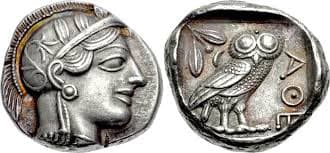
A coin does not have to be minted locally to become useful. Sometimes, its most interesting journey begins precisely when it crosses a border.
Imagine a merchant arriving in a city hundreds of kilometres from home.
He has a bag of silver coins.
They carry the face of a ruler whom the people here do not serve. The inscription is unfamiliar. The mint is foreign. The coin may have been struck in another political world entirely.
And yet the merchant expects someone to take it.
That tiny assumption contains an enormous amount of economic history.
Because before a foreign coin can become useful, somebody has to believe that it is worth accepting.
That sounds obvious today. We routinely accept money issued by institutions we have never met and, in many cases, never even think about. But in a world where monetary systems were fragmented, political authority changed from valley to valley, and the intrinsic metal content of a coin could matter as much as the name of the ruler on it, accepting somebody else's currency was not automatic.
It was a social decision.
And that is why the geographical distribution of foreign coins can sometimes tell us something much more interesting than where coins travelled.
It can tell us where trust travelled.
A coin crossing a border is not the same thing as a coin being accepted
This is the first distinction we need to make.
Finding a foreign coin somewhere does not automatically prove that merchants in that location routinely used it in everyday transactions.
A coin could arrive through military movement.
It could be carried as bullion.
It could be jewellery.
It could be a diplomatic gift.
It could be part of a traveller's personal savings.
It could even be an isolated object that tells us almost nothing about the local monetary system.
This is one of the traps of numismatic interpretation: the seductive simplicity of the map.
Put a dot on every place where a Roman denarius appears and draw a line between the dots, and suddenly you have a trade route.
Except history rarely works that cleanly.
The stronger question is not:
"Where did foreign coins end up?"
It is:
"Where did foreign coins become sufficiently familiar, trusted, and economically useful to appear repeatedly?"
That is a very different question.
And it turns coin distribution into something resembling a map of economic relationships.
What exactly is a "currency acceptance zone"?
Think of an acceptance zone as the geographical area in which a particular foreign currency appears to have been usable with enough regularity that merchants could reasonably expect other people to recognize and value it.
It doesn't necessarily mean that the foreign coin was the official currency.
It doesn't even mean that everyone preferred it.
Instead, it suggests a degree of monetary interoperability.
A Roman coin could circulate outside Roman political territory.
Islamic dirhams could travel enormous distances into northern Europe.
Coins minted in one Indian kingdom could appear far beyond its political core.
The important thing is that political borders and monetary borders did not necessarily coincide.
Ancient India gives us an especially useful reminder of this. Roman coins have been recovered in southern India despite southern India never being part of the Roman Empire. Their presence is one piece of the evidence for commercial connections between the subcontinent and the Roman world.
That is the fascinating bit.
A coin can obey an economic geography that ignores a political geography.
So how does trust enter the picture?
Imagine two merchants.
Merchant A offers you a coin you've never seen before.
Merchant B offers you a coin that merchants in three neighbouring towns already accept.
Which one do you take?
Probably B.
And if enough people make the same decision, something interesting happens.
The coin becomes easier to spend.
The next merchant knows someone else will probably accept it.
The merchant after that knows the same thing.
Eventually, accepting the foreign currency becomes self-reinforcing.
This is essentially a network effect.
A currency becomes useful partly because other people are willing to accept it.
That means a foreign coin circulating over a broad, dense geographical area may represent more than physical movement. It can represent a network of repeated interactions in which merchants, money changers, markets, institutions and consumers developed expectations about the coin's value.
The coin becomes familiar.
Familiarity reduces uncertainty.
Reduced uncertainty lowers the friction of trade.
And lower transaction friction makes more trade possible.
The coin is therefore not simply moving through a network.
It is helping reveal the network.
The really interesting evidence is not one coin. It is repetition.
One foreign coin is intriguing.
Twenty foreign coins from different contexts are more interesting.
A consistent concentration of the same coinage across multiple settlements is more interesting still.
This is where numismatists start thinking statistically.
Suppose a particular coin type is found:
at a major port,
along the road leading inland,
in a market town,
and then repeatedly at smaller settlements beyond it.
The pattern is stronger than a single isolated discovery.
Now add chronology.
Suppose the earliest coins cluster around the port, but later examples increasingly appear inland.
That might indicate an expanding zone of circulation.
And if the pattern persists over several decades, it becomes much harder to explain as a single traveller carrying a bag of coins.
This is why large datasets matter.
Recent economic-historical research has assembled hundreds of thousands of ancient coins and used models of how money diffuses through trade networks to reconstruct changes in economic connectivity.
The methodology is essentially turning thousands of tiny archaeological observations into a picture of a much larger system.
But foreign coins do not always mean foreign currency
Here is where things get delightfully messy.
A merchant may accept a foreign coin because of its metal, not because of its face value.
A silver coin can be valued according to its weight.
A gold coin can be treated as a high-value store of wealth.
A worn coin can be clipped, melted, pierced or otherwise transformed.
A foreign coin may therefore enter an economy without entering its monetary system in the modern sense.
This distinction matters enormously.
Roman coins found in India, for instance, cannot simply be translated into the statement:
"Roman money was used as normal currency in India."
The evidence is more complicated. Some coins were hoarded, some were modified, and the archaeological context matters. Recent scholarship specifically emphasizes the value of studying pierced, slashed, plugged and imitative Roman coins in India because these alterations can reveal how the coins were actually being used and deposited.
In other words:
A foreign coin can be economically important without being accepted at face value.
And that is exactly why methodology matters.
The strongest signal: multiple currencies coexisting
Sometimes the most revealing evidence is not a single foreign currency spreading everywhere.
It is several currencies appearing together.
Consider a commercial zone sitting between two monetary systems.
Merchants arrive from different directions.
One group brings Currency A.
Another brings Currency B.
Local markets use Currency C.
If all three repeatedly appear in commercial contexts, the region may be functioning as a monetary interface.
This does not necessarily mean that every shopkeeper happily accepted everything.
Instead, it suggests that there were mechanisms for converting, weighing, discounting, testing or otherwise negotiating between currencies.
And that requires institutions.
Money changers.
Merchants with knowledge of foreign coin standards.
Assayers.
Bankers.
Markets.
Trustworthy scales.
Shared expectations.
Perhaps even established conventions about which foreign coins were acceptable and at what rates.
A monetary network therefore tells us something about human infrastructure, not merely metal.
The Roman frontier is a beautiful example of the problem
Roman coins travelled beyond Roman territory, but interpreting that movement requires caution.
Recent scholarship on Roman coin hoards beyond the frontier shows that coins could move for several different reasons: commercial exchange, military movements, bulk transfers, bullion-like use, and other forms of movement. In some eastern regions, Roman coins appear alongside local currencies, and even local imitations of Roman issues occur.
That creates a fascinating possibility.
The presence of a foreign coin can reveal not simply trade with Rome, but the degree to which a local market had learned to interact with Roman monetary objects.
That is a subtle distinction.
And subtle distinctions are where good numismatics begins.
How to actually identify a trust network
If you were handed a database of coin finds and asked to investigate this yourself, don't start by drawing arrows on a map.
Start with five questions.
1. Where was the coin minted?
Identify the mint as precisely as possible.
A coin minted hundreds of kilometres away tells us something different from one produced twenty kilometres away.
2. When was it minted?
Chronology is essential.
A coin found today may have been deposited centuries after it was struck.
Its minting date tells us when it could have entered circulation, not necessarily when it arrived.
3. What is the archaeological context?
A market deposit is different from a grave.
A hoard is different from a temple offering.
A shipwreck is different from an isolated surface find.
Context is the difference between evidence and storytelling.
4. Is the pattern repeated?
One coin is an anecdote.
A statistically meaningful distribution is evidence.
5. What else is moving?
This may be the most important question.
Do ceramics, inscriptions, weights, metals, glassware or other goods show similar connections?
When several independent forms of evidence point toward the same network, the argument becomes substantially stronger.
The surprising conclusion: trust can leave archaeological fingerprints
We tend to imagine trust as something invisible.
You cannot excavate a handshake.
You cannot recover a merchant's confidence from the soil.
But economic trust can create physical patterns.
If merchants repeatedly accept foreign money, foreign coins can accumulate in predictable places.
If those coins become less acceptable outside a particular region, their distribution may thin out sharply.
If certain currencies become trusted along particular corridors, their archaeological footprint can follow those corridors.
The coin is therefore acting as a kind of fossilised transaction.
Not a perfect fossil.
Not a literal record of every transaction.
But a trace left behind by repeated human decisions.
And perhaps that is the most beautiful thing about studying monetary systems.
A coin is small enough to fit between your fingers.
Yet behind its circulation may sit thousands of decisions:
"I'll take it."
"He'll take it."
"The market down the road accepts these."
"The silver is good."
"I've seen this type before."
"I trust the weight."
Multiply those decisions across generations and suddenly you have a trade network.
The road itself may have disappeared.
The merchant's name is forgotten.
The market may have been buried.
But the currency sometimes remains.
And if we learn how to read its geography carefully, we can begin to reconstruct not just where merchants travelled, but where they believed other people would meet them halfway.