Overstruck Coins as Evidence of Regime Shock and Monetary Panic
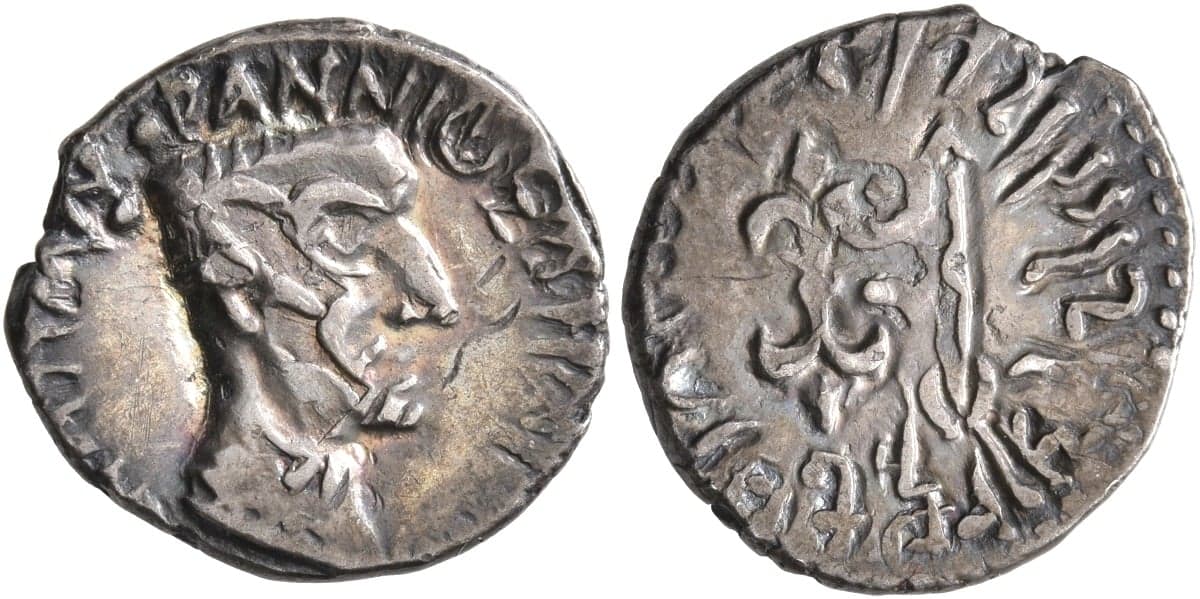
A coin can be politically obsolete before it is physically obsolete.
That is one of the strangest things about ancient money.
A new ruler could inherit an enormous pile of perfectly usable silver or bronze coins bearing the face, name, or symbols of a predecessor. The metal was still valuable. The weight was still useful. Merchants still understood the denomination.
And yet the new regime might decide that the old coin had to disappear.
Not melt.
Not necessarily destroy.
Overwrite it.
A fresh design could be struck directly over an older coin, leaving traces of the previous monetary order underneath. Sometimes the result is visually messy. Sometimes the old portrait peeks through. Sometimes an inscription becomes a ghostly second text. Sometimes the overstrike is so aggressive that the earlier coin almost vanishes.
For collectors, this can look like a manufacturing curiosity.
For economic historians, it can be something much more interesting:
evidence that a monetary system was forced to change faster than its metal supply could.
That is the central hypothesis of overstruck coinage.
But there is an important qualification.
An overstrike is not automatically evidence of panic.
It is evidence of monetary intervention.
The job of the numismatist is to determine whether that intervention reflects ordinary administrative recycling, a monetary reform, a political transition, a fiscal emergency, or something closer to genuine monetary shock.
That distinction is where the real story begins.
The Coin That Refuses to Become the Past
Coins normally have a strange advantage over other political objects.
A king can die.
A dynasty can collapse.
A government can be overthrown.
But yesterday's silver does not suddenly stop being silver.
This creates a problem for regimes.
Suppose a new authority takes power and wants its own coinage in circulation. It can simply begin striking new coins, but the old coins remain in people's purses, merchants' cashboxes, temple treasuries and buried savings.
If the old coins are plentiful, the new regime may have a political problem.
The population is carrying the previous government's money.
One solution is to call in the old coinage and restrike it.
This is where overstriking becomes economically revealing.
The government is effectively saying:
We need the metal back, but we do not want the old monetary identity to survive.
That is a very different proposition from simply minting more coins.
The old coin becomes raw material for the new monetary order.
Why Overstriking Happens
There are several possible reasons.
1. Political replacement
A new ruler may want his own portrait, title or religious imagery on circulating money.
This is the most obvious explanation.
Money is public messaging. If millions of people handle an object every day, changing its imagery can be an extraordinarily efficient way of announcing who now possesses authority.
2. Monetary reform
A government may change denominations, standards or designs.
Instead of acquiring an entirely new stock of metal, the mint can recycle existing coins.
This is especially attractive when precious metal is scarce or expensive.
3. Fiscal emergency
This is where the hypothesis becomes particularly interesting.
If a state urgently needs to mobilize monetary resources, recalling and restriking existing coins can be faster than waiting for new bullion supplies.
The monetary system becomes a recycling machine.
Old money is pulled inward.
It is transformed.
It is pushed back outward.
The physical coin therefore records an administrative decision that may have occurred under pressure.
4. Loss of confidence or monetary control
Sometimes the problem is not simply the ruler.
It is the monetary system itself.
A government may need to demonstrate that old money has been replaced by a new standard.
In those circumstances, overstriking can become part of a broader attempt to restore confidence.
But this is precisely where collectors need to resist dramatic storytelling.
The presence of an overstrike does not prove panic.
It proves that someone considered it worthwhile to transform an existing coin.
The historical context has to tell us why.
The Athenian Example: When Silver Was Called Back
One of the clearest demonstrations of this principle comes from Athens.
In 353 BC, Athens undertook a major reminting operation involving its larger silver denominations.
The background was financial pressure following the Social War.
Rather than simply manufacture an entirely new supply of silver, the city demonetized existing large silver coins and called them in for restriking.
The resulting coins were not necessarily elegant.
In fact, some displayed hurried or technically unusual production characteristics.
That ugliness is historically useful.
It can preserve evidence of the process itself.
The coin becomes a tiny industrial document.
It tells us not merely what Athens wanted its money to look like, but something about how urgently the city needed to reorganize its monetary resources.
This is one reason overstrikes deserve more attention than they usually receive.
A beautifully struck coin tells us about the final product.
An ugly overstrike can tell us about the transition.
And transitions are where economic history often becomes visible.
Reading the Ghost Under the Coin
For collectors, an overstruck coin should be approached almost like a palimpsest.
The first layer is the visible coin.
The second layer is the buried coin.
The third layer is the process that connected them.
Start with the visible design.
Identify the ruler, denomination, mint and approximate date.
Then ask:
What is underneath?
A fragment of an earlier portrait?
A different legend?
A previous reverse type?
A second set of control marks?
Sometimes the answer is surprisingly clear.
Other times, the apparent “undertype” is just damage, die doubling, surface distortion or corrosion.
This is why identification should never rely on one exciting visual clue.
The strongest approach combines:
weight
diameter
metal
fabric
visible undertype
die style
inscription
known overstrike pairings
minting technology
historical chronology
The undertype has to make chronological sense.
If the supposed undertype belongs to a later ruler, you do not have a fascinating monetary crisis.
You have a bad attribution.
The Most Important Question: Why This Coin?
This is the question that separates collecting from historical analysis.
Imagine discovering a coin overstruck by a new regime.
It is tempting to say:
“New ruler. Old coin. Political crisis.”
But there are several missing steps.
How common was the overstrike?
Was the old coin officially recalled?
Was the new coin part of a reform?
Did the state lack sufficient bullion?
Was the old type politically unacceptable?
Did the overstriking happen throughout the monetary system or only at one mint?
Was the operation short-lived?
Were coins being rapidly produced with inferior technical quality?
The answers collectively determine how much historical weight the overstrike deserves.
One coin is an anecdote.
A pattern is evidence.
A dated pattern tied to documentary, archaeological and metallurgical evidence can become an argument.
Overstrikes as “Regime Shock” Indicators
The phrase regime shock is useful because political change and monetary change do not always occur at the same speed.
A new government may arrive on Monday.
The population may still be carrying coins of the old government on Tuesday.
The mint therefore becomes one of the places where political reality collides with physical reality.
An overstrike can represent that collision.
The old coin is literally underneath the new government.
That is why these coins are unusually powerful historical objects.
They contain two monetary identities in the same piece of metal.
One belonged to the previous system.
One belongs to the new system.
The coin therefore preserves a miniature chronology of institutional replacement.
But Don't Confuse Intervention With Panic
This is perhaps the most important methodological warning.
Overstriking is not synonymous with crisis.
Governments overstruck coins for practical reasons.
Metal recycling can be rational even in stable economies.
Political redesign can be routine.
Denominational reform can be planned years in advance.
Therefore, the strongest hypothesis is not:
“This coin is overstruck, therefore there was a panic.”
It is:
“This coin was overstruck; therefore a monetary authority deliberately transformed existing monetary material. We can now investigate whether the scale, speed, chronology and context of that intervention correspond to political disruption, fiscal stress or monetary reform.”
That is a much stronger argument.
It is also much harder to make.
Which is exactly why it is useful.
A Collector's Method for Overstruck Coins
If you encounter a possible overstrike, work through the evidence in order.
Step 1: Identify the host coin
Determine what the original coin appears to have been.
Do not start with the overstruck type.
Start underneath.
Step 2: Identify the overstriking authority
Establish who struck the later design and where.
Step 3: Check chronology
The overstriking authority must obviously be later than the host coin.
But more importantly, determine how much later.
A narrow chronological interval can be much more informative than a broad one.
Step 4: Compare known examples
One spectacular coin can deceive you.
A die study or documented group of overstrikes can reveal whether the phenomenon was systematic.
Step 5: Examine production quality
Signs of haste, unusual flans, incomplete designs or inconsistent striking may be clues.
They are not proof by themselves.
Step 6: Look for historical corroboration
Reforms, wars, fiscal crises, political transitions and documented recalls can dramatically strengthen the interpretation.
Step 7: Separate the coin from the story
This is the hardest step.
Do not make the coin say more than the evidence allows.
The coin is evidence.
Your interpretation is a hypothesis.
Keeping those two things separate is one of the great disciplines of serious numismatics.
The Beautiful Irony of an Overstrike
There is something almost poetic about the economics of it.
A government may try to erase the previous monetary order.
But it accidentally preserves it.
The old ruler's portrait survives beneath the new one.
The old lettering remains trapped under the new design.
The previous denomination may still determine the physical shape of the object.
The regime intended to overwrite history.
Instead, it created an archaeological record of the moment when history changed.
That is the deeper lesson of overstruck coins.
Money remembers.
Not because coins have memories, obviously.
Because metal is stubborn.
Political authority can change overnight.
Monetary identities can be rewritten.
But the physical object often refuses to cooperate completely.
And for the numismatist, those imperfections are not defects.
They are the evidence.