The Athenian Owl Tetradrachm and the Birth of Monetary Trust
Before there were central banks, there were no monetary policy committees.
Before there were currency markets, there were no exchange screens flashing numbers across glass walls.
Before there were financial apps telling you whether your money had moved up or down today, there was a piece of silver.
Athens put an owl on it.
And somehow, people trusted it enough to take it across the ancient Mediterranean.
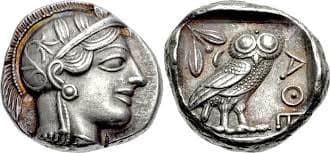
The Athenian owl tetradrachm is one of the most famous coins of the ancient world.
Athena on one side.
An owl on the other.
A small olive sprig.
A crescent moon.
A few Greek letters.
And a chunk of high-quality silver underneath all of it.
The British Museum notes that Athenian “owls” became one of the most famous coin types of the ancient world and remained essentially stable for centuries because they were trusted for their silver purity.
That sentence contains the entire secret.
People trusted the owl.
But why?
That is the real story.
A coin becomes powerful when people stop asking questions
Imagine you are a merchant in the ancient Mediterranean.
Someone offers you a silver coin.
You don't know the person particularly well.
You don't necessarily know where they are from.
You need to decide whether to accept it.
You could weigh it.
Test the silver.
Inspect the design.
Compare it with coins you already know.
Or you could simply recognise it.
That last option is incredibly valuable.
Because every transaction becomes faster when everyone knows what the coin is.
And this is where the Athenian owl becomes a fascinating study in monetary trust.
It was not merely a coin.
It became a recognition system.
Athens had something the ancient world desperately wanted
Silver.
Athens had access to major silver resources, especially the mines at Laurion in Attica.
This silver helped finance the production of Athenian coinage.
But having silver is not enough.
You have to turn it into something people trust.
A lump of silver is valuable.
A standardised coin can be even more useful.
Why?
Because the coin tells you something.
It says:
This metal has been measured.
This weight has been standardised.
This object has been checked.
The state stands behind the issue.
And if enough people accept it, you don't have to repeat the whole process every time.
That is monetary trust.
The owl is basically an ancient logo
The coin's reverse shows an owl, the sacred bird of Athena.
The Greek letters ΑΘΕ identify Athens.
The image became so strongly associated with Athenian silver coinage that the coins themselves became known simply as “owls.”
The British Museum describes the owl type as one of the most famous coin designs of antiquity.
Think about what that means.
The state has created a recognisable visual identity.
No advertising campaign.
No billboards.
No television.
Just millions of little silver discs moving through markets.
The owl is a logo that travels at walking speed.
Why Athena?
Because coins do not merely need to be recognisable.
They need to communicate authority.
Athena was the city's patron goddess.
Her helmeted head immediately connected the coin to Athens.
On the reverse, her owl reinforced the association.
The coin therefore carried the city with it.
A merchant did not need to see the Acropolis.
He could see Athena.
The political community had been compressed into silver.
And the silver was the real credibility
This is important.
The owl did not become trusted because it had a cute bird on it.
The design created recognition.
The metal created credibility.
The combination created trust.
A coin's imagery can tell you who issued it.
Its physical standard tells you why people should care.
This is one of the most important methodological principles in ancient numismatics:
never separate iconography from economics.
The owl is art.
The silver is economics.
Together, they are money.
The famous Athenian standard
A tetradrachm was a large silver denomination.
The name itself tells you something: tetra means four.
It was worth four drachms within the Athenian monetary system.
The coin's substantial silver content made it suitable for significant transactions.
This is important because monetary systems are built in layers.
A tiny bronze coin can handle a small purchase.
A large silver coin can handle a much larger transaction.
Gold can sit at another level entirely.
The tetradrachm occupied the world of substantial value.
And that made its reputation especially important.
Athens was a trading power
The Athenian owl became widely accepted beyond Attica.
That was not accidental.
Athens was deeply connected to Mediterranean commerce.
Ships moved.
Merchants moved.
Silver moved.
Grain moved.
Olive oil moved.
Pottery moved.
People moved.
And money moved with them.
The coin therefore benefited from a network effect.
The more merchants accepted Athenian silver, the more attractive it became to others.
The more widely it circulated, the more recognisable it became.
The more recognisable it became, the easier it was to accept.
Again:
money becomes stronger when everyone else already believes in it.
The owl had a surprisingly long career
The British Museum notes that the Athenian type remained basically the same from roughly 520 BC to 260 BC, with only minor design changes, because of trust in its silver purity.
That is extraordinary.
Imagine using a logo for centuries.
Companies today redesign their logos because somebody thinks the font looks slightly dated.
Athens essentially said:
The owl works. Leave the owl alone.
And the market agreed.
This stability mattered.
If people repeatedly encountered the same basic design and knew that it represented reliable silver, recognition accumulated.
Consistency became an asset.
Monetary trust is partly psychological
This is where the owl becomes more than a historical curiosity.
Trust in money has always involved psychology.
You are accepting something because you believe it will retain purchasing power.
That belief is based on evidence.
The metal.
The weight.
The reputation.
The issuer.
The network of users.
The ability to exchange it later.
The owl had several of these advantages simultaneously.
That is why it became so durable.
And it is also why coins can collapse when trust collapses.
Change the silver content too dramatically.
Alter the weight.
Flood the market with questionable pieces.
Allow counterfeiting to become rampant.
Destroy confidence.
The coin's physical appearance may remain.
Its monetary reputation can disappear.
The owl also funded Athens' ambitions
The story of Athenian silver cannot be separated from the city's military and political power.
Athens used the wealth associated with its silver resources to support a powerful state.
The city's famous naval strength, for example, depended on large-scale financial resources.
Coinage therefore sits inside a much bigger economic machine.
Mines produce silver.
Silver becomes coin.
Coin pays workers and soldiers.
The state builds ships.
Ships protect trade and project power.
Trade brings wealth.
More wealth supports the state.
The system feeds itself.
This does not mean “the owl coin caused Athenian power.”
That would be ridiculous.
But the coin was part of the infrastructure that made that power possible.
Then Athens spends the silver
The British Museum's collections and exhibitions highlight how Athenian silver was exported and used in the wider Mediterranean, alongside local coinage and silver ingots.
This is an important detail.
Silver did not simply sit inside Athens.
It travelled.
And when it travelled, Athens travelled with it.
A merchant accepting an owl was participating in the economic reputation of the city that issued it.
The coin was therefore a tiny ambassador.
Much cheaper than sending an actual ambassador.
And considerably harder to argue with.
The owl survives because it is boring
This may be the most underrated part of the story.
The owl does not need to reinvent itself every few years.
Its power comes partly from familiarity.
Imagine a merchant seeing the same basic coin type again and again over decades.
He learns:
Athena.
Owl.
Silver.
Athens.
Reliable.
That sequence becomes almost automatic.
This is exactly what successful money wants.
You should not have to think too hard about whether your money is money.
The owl had achieved that.
How should collectors study an Athenian owl?
1. Start with the design
Athena's portrait.
The helmet.
The owl.
The olive branch.
The crescent.
The ethnic inscription.
Learn the standard type.
2. Study the style
Ancient coins are not machine-perfect objects.
Die engraving varies.
Portrait style varies.
Letter forms vary.
The shape of the owl varies.
These differences can help with chronology and attribution.
3. Examine the weight
A tetradrachm should make sense within the expected Athenian weight standard.
Weight is one of the first objective measurements you should take.
4. Study the flan
How was the silver prepared?
How does the coin's shape relate to the strike?
What happened at the edges?
Ancient minting leaves physical evidence.
5. Examine the surfaces
Look for unusual tooling, casting characteristics, artificial patination or other suspicious features.
No single test proves authenticity.
The strongest authentication is cumulative.
6. Ask what the coin was used for
This sounds obvious.
It is not.
A coin's history becomes much richer when you stop seeing it as a collectible and start imagining its economic life.
Who handled it?
Where might it have travelled?
What kinds of transactions could it have participated in?
The answer turns a coin into a historical object.
The owl and the birth of monetary trust
Strictly speaking, the owl did not invent monetary trust.
People trusted many forms of money before Athens.
But the Athenian tetradrachm gives us an unusually clear case of how monetary trust can become institutionalised.
The recipe is fascinating:
standard weight
+
valuable metal
+
recognisable design
+
political authority
+
large commercial network
=
trust
And once trust exists, it reinforces itself.
People accept the coin because other people accept it.
Other people accept it because they know everyone else does.
The network becomes self-sustaining.
This is not a modern phenomenon.
It is ancient.
Very ancient.
The owl's real legacy
The Athenian owl became so recognisable that its imagery has survived into modern Greek visual culture.
But its more important legacy is conceptual.
It demonstrates that successful money is not merely an object with value.
It is a social agreement wrapped around a physical object.
The silver matters.
The weight matters.
The issuer matters.
The imagery matters.
But the final ingredient is collective expectation.
You accept the coin because you expect someone else to accept it from you.
That is the invisible part of money.
And it may be the most important part.
The little bird that conquered the Mediterranean
So when you look at an Athenian owl, don't just see an ancient Greek coin.
See a city trying to turn silver into trust.
See miners extracting metal from Laurion.
See craftsmen preparing blanks and dies.
See officials managing coinage.
See merchants carrying silver across the Aegean.
See traders recognising the owl.
See a marketplace where one person's acceptance makes the next person's acceptance easier.
And see why Athens could put the same basic design into circulation for centuries.
The coin worked.
The silver was trusted.
The owl was recognisable.
The network grew.
And eventually the little bird became one of the most famous symbols in ancient numismatics.
That is the beautiful thing about monetary history.
Sometimes the biggest economic ideas hide inside very small objects.
An empire.
A trade network.
A political system.
A marketplace.
All compressed into a disc of silver.
And on that disc, staring back at you across twenty-five centuries, is an owl.
It is almost as if Athens knew exactly what it was doing.
It was not merely minting money.
It was building trust you could hold in your hand.