The British Gold Sovereign
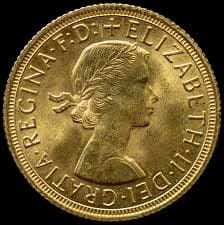
There are coins that represent a country.
And then there are coins that seem to have been given a passport, a map, and instructions to go conquer the planet.
The British gold sovereign is one of those coins.
At first glance, it is almost absurdly simple: a gold coin, a monarch on one side, St George and the dragon on the other, and a denomination that feels almost secondary to the object itself.
But the sovereign was never merely a £1 coin.
It was a promise.
A piece of portable credibility.
A carefully manufactured argument that Britain could put a precise amount of precious metal into a tiny disc, stamp a monarch onto it, and send it into the world with the expectation that strangers thousands of miles away would recognise what it meant.
That is a remarkable achievement.
And once you understand the sovereign this way, collecting them becomes much more interesting.
Because you are not merely collecting portraits of British monarchs.
You are collecting the physical infrastructure of an empire.
The sovereign begins with a problem
The original sovereign appeared in 1489 during the reign of Henry VII.
That first sovereign was not the coin collectors know today.
It was a large gold coin designed as a prestigious piece of royal money, and its name referred to the sovereign — the monarch — rather than initially functioning as a simple everyday denomination.
The Royal Mint traces the modern sovereign's history back to this Tudor origin before its later transformation into the famous 19th-century gold coin.
And this distinction matters.
Coins evolve.
Names survive.
Denominations change.
A coin can disappear for centuries and then return wearing the same name but performing a completely different economic job.
The sovereign is a spectacular example.
Then Britain gets serious about money
The sovereign disappeared as a regular circulating denomination before returning in its modern form in 1817.
And the reason for that return was not aesthetic.
Britain had just gone through a prolonged period of monetary disruption during the Napoleonic Wars.
The Bank of England had suspended gold convertibility in 1797, and Britain eventually moved toward restoring a stable gold standard.
The Coinage Act of 1816 established the framework for the new British coinage, and the sovereign returned in 1817 as the country's new gold £1 coin.
The Royal Mint describes the 1817 sovereign as a key product of this post-Napoleonic monetary reform.
And this is where the sovereign becomes genuinely fascinating.
The government was not simply issuing a shiny new coin.
It was rebuilding confidence.
Imagine an economy where people are asking:
What exactly is a pound worth?
The answer cannot simply be:
“Trust us.”
A functioning monetary system needs something more tangible.
The sovereign gave Britain a physical answer.
A pound was represented by a precisely defined quantity of gold.
The modern sovereign contained 22-carat gold and weighed approximately 7.98 grams, with a fine-gold content of about 7.32 grams.
That is not an arbitrary lump of metal.
It is a specification.
And specifications are the boring-looking skeleton underneath financial civilisation.
The coin was engineered for trust
The 1817 sovereign was designed to a standard.
That standard mattered enormously.
Because if you are a merchant accepting a gold coin from someone you have never met, you have a problem.
How do you know it contains the gold it claims to contain?
You weigh it.
You inspect it.
You recognise its design.
You learn what genuine examples look like.
And eventually, if enough people trust the issuing authority, you begin accepting it almost automatically.
That is the extraordinary thing about successful money.
The less you think about whether it will work, the better the monetary system is functioning.
The sovereign was built to make that trust portable.
And then came St George
The reverse of the modern sovereign is one of the most recognisable designs in British numismatics.
St George slaying the dragon.
Designed by Italian engraver Benedetto Pistrucci for the 1817 sovereign, it became one of the great enduring images of British coinage. The Royal Mint identifies Pistrucci's St George and the Dragon as one of the sovereign's defining features.
And this is where numismatics gets delightfully sneaky.
The coin is doing several jobs simultaneously.
It is money.
It is an object of state authority.
It is art.
It is symbolism.
It is branding.
Yes.
Branding.
A government in the nineteenth century didn't have social media.
It had coins.
And coins travelled extraordinarily well.
A coin that went abroad
This is perhaps the most important thing about the sovereign.
It did not remain politely inside Britain.
The British Empire gave the sovereign an enormous geographic stage.
Sovereigns were struck not only in London but at branch mints including Sydney, Melbourne, Perth, Bombay and Pretoria.
The Royal Mint's historical records document the role of these overseas mints in sovereign production.
Now stop and think about what that means.
A British coin was being manufactured in Australia.
Another was being manufactured in India.
Another in South Africa.
They carried the same broad monetary identity while physically emerging from very different corners of the imperial system.
The sovereign was becoming something larger than a domestic British coin.
It was becoming an imperial monetary instrument.
The Bombay sovereign is especially fascinating
For Indian collectors, the Bombay connection makes the sovereign particularly interesting.
The Bombay Mint produced sovereigns beginning in 1918, during the First World War period, when the British Empire's monetary and industrial networks were under enormous pressure.
A British sovereign made in Bombay is therefore not merely “a sovereign from another mint.”
It is physical evidence of the empire's monetary geography.
Gold entered one system.
Was processed through another.
Was struck into a recognisable British monetary object.
And could then move through international commerce.
That is globalisation in your palm.
The sovereign's denomination was almost beside the point
This is one of the strange things about gold sovereigns.
They were nominally £1 coins.
But their importance cannot be understood simply through their face value.
Their gold content mattered.
Their recognisability mattered.
Their reputation mattered.
And their international acceptance mattered.
This is why the sovereign became so useful in international payments.
A British merchant did not necessarily need everyone involved in a transaction to share the same national currency.
They needed people to recognise the gold standard represented by the coin.
This is the difference between money as a local instrument and money as an international language.
The sovereign becomes an empire's handshake
Imagine a merchant in Bombay.
A banker in London.
A trader in Melbourne.
A military officer in South Africa.
They don't share the same daily experiences.
They don't necessarily speak the same language.
They certainly don't have identical political interests.
But a standard gold sovereign can move between them.
That little disc becomes a common reference point.
The state doesn't need to personally supervise every transaction.
The coin carries some of the trust for it.
This is why standardisation is so powerful.
You don't need everyone to know everyone.
You need everyone to recognise the measuring instrument.
And then the First World War changes everything
The sovereign's golden age could not last forever.
The First World War placed extraordinary pressure on Britain's monetary system.
Gold began disappearing from ordinary circulation.
People hoarded it.
Governments restricted its movement.
Paper money became increasingly important.
Britain eventually abandoned the domestic gold standard in 1931.
The sovereign had already ceased to function as ordinary everyday money by then, but its story as a monetary instrument had fundamentally changed.
The coin survived.
Its economic role did not.
And this distinction is crucial.
A coin can remain physically important after it stops being functionally important.
That is exactly what happened to the sovereign.
From money to collectible
This is where the modern sovereign becomes especially interesting.
Today, many sovereigns are bought by collectors and investors rather than used to purchase groceries.
The object survived.
The economic context changed.
And suddenly the coin acquired another kind of value.
Historical value.
Numismatic value.
Metal value.
Condition.
Rarity.
Mint.
Date.
Die variety.
Provenance.
The sovereign became a meeting point between bullion and history.
And that creates a fascinating tension.
Two sovereigns can contain essentially the same amount of gold while having radically different collector significance.
A common George V sovereign and a scarce Victorian variety are not interchangeable simply because the gold content is similar.
The metal is one layer of the object.
The history is another.
How should you collect sovereigns?
This is where methodology matters.
Do not start with:
“Which sovereign is expensive?”
Start with:
“What variable makes this sovereign interesting?”
Date
The date is your first anchor.
It tells you when the coin was struck, but it can also point toward historical circumstances.
A sovereign from the Napoleonic era is telling you something very different from one struck during the First World War.
Monarch
The portrait identifies the reign and gives the coin political context.
But don't stop at the face.
Ask what changed in Britain during that reign.
Mint
This is crucial.
London.
Sydney.
Melbourne.
Perth.
Bombay.
Pretoria.
The mint mark can transform an apparently ordinary sovereign into a piece of imperial economic geography.
Condition
Wear matters.
The details of St George.
The portrait.
The legends.
The fields.
The overall sharpness.
A coin that spent decades circulating has a different physical biography from one that sat untouched in a vault.
Rarity
Rarity is not the same thing as age.
This deserves to be engraved above every collector's desk.
Old does not automatically mean rare.
And rare does not automatically mean historically important.
You need evidence for all three.
The sovereign's strangest achievement
The most remarkable thing about the sovereign may be that it managed to become several different things over its lifetime.
It began as a prestigious royal coin.
It returned as a precisely defined monetary unit.
It became an international gold coin.
It travelled through an empire.
It was struck on multiple continents.
It participated in global trade.
It disappeared from everyday circulation.
And then it became a collector's object.
Same basic object.
Different economic meanings.
That is what makes coins so much more interesting than their dimensions suggest.
A little gold coin, carrying an enormous system
The sovereign is easy to underestimate because it is beautiful.
Beautiful objects can trick us into looking only at their surfaces.
But the surface is where the argument begins.
The monarch tells you who claims authority.
The gold tells you what gives the coin material credibility.
The weight tells you that the promise has been standardised.
The mint mark tells you where the imperial machinery produced it.
The date tells you when it entered the system.
And the wear tells you that people actually touched it.
A sovereign is therefore not just a coin.
It is a compressed history of Britain's attempt to turn trust into metal.
And perhaps that is why the sovereign has lasted.
Empires disappear.
Gold gets melted.
Political systems collapse.
But a well-made coin has an irritating habit of surviving its creators.
You can lose the empire.
You can lose the gold standard.
You can lose the world that gave the sovereign its original meaning.
And still, more than a century later, somebody can place one in your hand.
You turn it over.
St George is still fighting the dragon.
And for one wonderfully strange moment, the nineteenth-century world is still there.