The Mughal Rupiya and the Monetization of a Subcontinental Economy
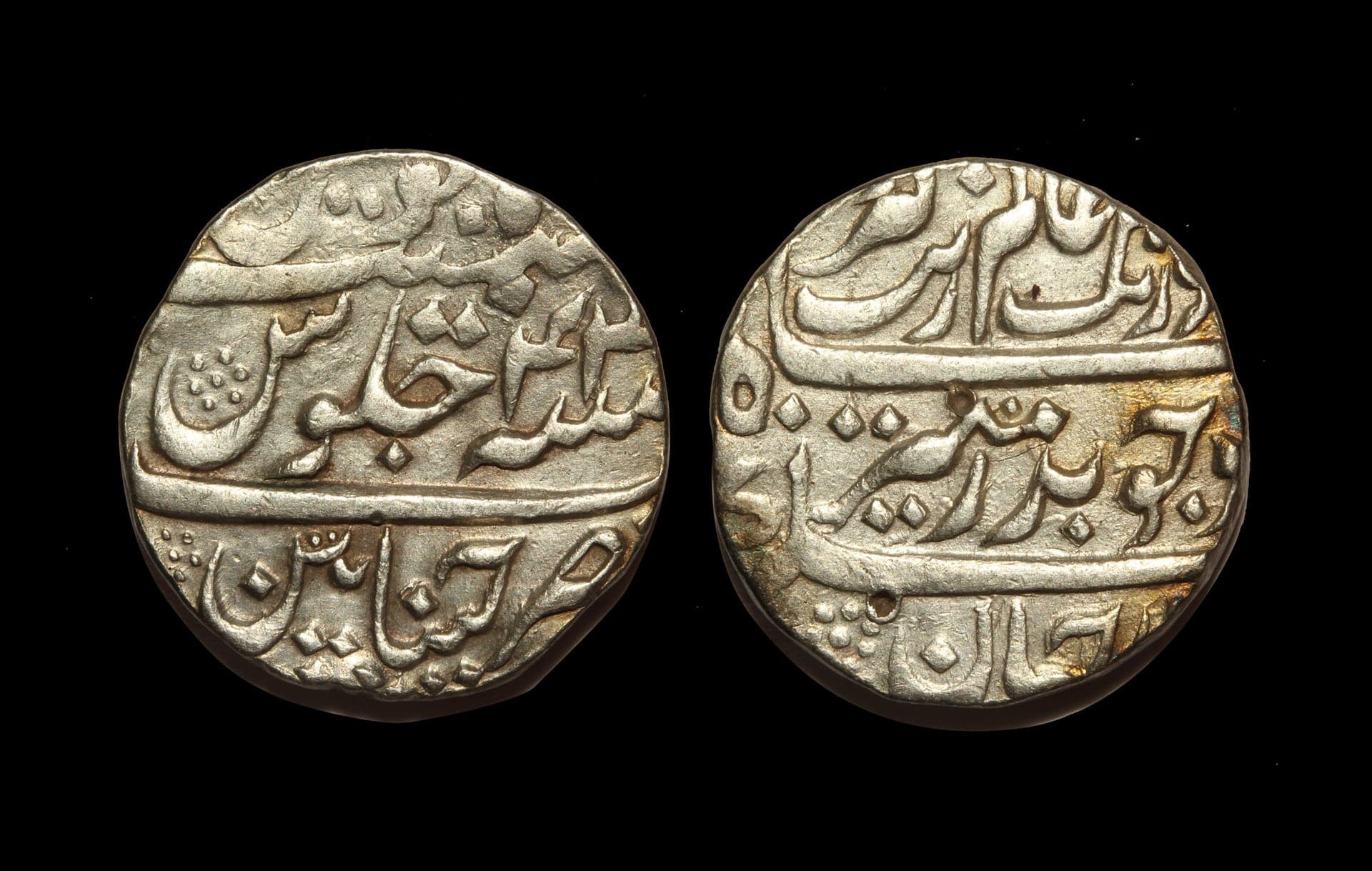
The rupee feels so familiar that it is easy to forget how radical the idea once was.
Today, “rupee” sounds like the most ordinary thing in the world.
You see the symbol.
You hear the word.
You spend it without thinking.
But the rupee has a history that reaches deep into the transformation of the Indian subcontinent's economy.
And the Mughal period is where that story becomes especially interesting.
Because the Mughal rupiya was not simply a silver coin.
It was part of a much larger process:
turning an enormous and economically diverse subcontinent into a more integrated monetary space.
That does not mean everyone suddenly stopped using barter.
They didn't.
It does not mean every village became a cash economy.
It didn't.
And it certainly does not mean the Mughals invented money in India.
They did not.
The important story is subtler.
The Mughal state inherited existing monetary traditions, standardised important aspects of coinage, expanded taxation and commercial networks, and helped create conditions in which silver money could circulate across enormous distances.
The coin was one part of that machine.
And that machine changed India.
First, let's kill a common misconception
The rupee did not simply appear from nowhere under the Mughals.
The famous silver rupiya is closely associated with Sher Shah Suri, who ruled northern India in the 1540s and 1550s.
His monetary reforms helped establish a standard silver coin of roughly 178 grains — approximately 11.5 grams — that became enormously influential.
When the Mughals returned to power under Humayun and especially Akbar, they inherited and developed this monetary framework.
This matters because history is rarely a sequence of people inventing things from scratch.
Institutions get inherited.
Modified.
Standardised.
Expanded.
Sometimes the most important achievement is not inventing a new idea.
It is making the idea work at scale.
Akbar understood scale
The Mughal Empire under Akbar was enormous.
And governing enormous territory creates a boring but devastatingly important problem:
accounting.
You need to collect revenue.
You need to pay officials.
You need to supply armies.
You need to move goods.
You need to settle debts.
You need to calculate obligations across regions where local practices may differ.
You need units of value that people can actually use.
That is where the silver rupiya becomes much more than a coin.
It becomes a measuring instrument for the empire.
The Mughal monetary system used gold, silver and copper denominations, including the gold mohur, silver rupiya and copper dam.
Different coins served different economic functions.
And the relationship between them mattered.
The rupiya was built around silver
The great strength of the Mughal rupiya was its standardisation.
The silver coin was approximately 11.4–11.5 grams in the classic standard, with high silver fineness.
That consistency was enormously useful.
If a tax assessment could be expressed in rupiyas, and a merchant could accept rupiyas, and a moneychanger could value rupiyas, then economic activity became easier to coordinate.
That sounds obvious.
It wasn't.
Standardisation is one of those things we only notice when it is missing.
Imagine conducting a major commercial transaction when every region has different weights, different silver standards, different coin types and different rules about what counts as legitimate money.
Every transaction acquires friction.
Every exchange needs conversion.
Every tax assessment becomes a negotiation.
Standard coinage reduces that friction.
The Mughal economy was not “cash everywhere”
This is where we need some methodological discipline.
It is tempting to describe the Mughal period as the moment India became a fully monetised economy.
That would be too simplistic.
Agrarian production remained deeply embedded in local and customary systems.
Payments could be made in kind.
Local economies could operate with different degrees of monetisation.
Different regions had different commercial structures.
The important transformation was not the elimination of non-cash exchange.
It was the expansion of monetary exchange and the increasing importance of silver currency within taxation and commerce.
That is a much more defensible claim.
And, frankly, it is much more interesting.
Because economic transformation almost never works like a light switch.
It works like a tide.
Some places get wet first.
Some much later.
Some resist.
Some benefit.
Some adapt.
The rupiya was part of that tide.
The tax system is where things get serious
The Mughal state depended heavily on land revenue.
And land revenue had to be assessed, collected and transferred.
Akbar's administration introduced sophisticated systems for measuring land, classifying agricultural productivity and assessing revenue.
The famous revenue reforms associated with Raja Todar Mal helped create a more systematic framework for fiscal administration.
Now connect that to the rupiya.
Once revenue obligations can be calculated in a standard monetary unit, the state gains a common accounting language.
That does not mean every peasant physically handed over silver coins.
Payments could involve complex combinations of cash, produce and intermediaries.
But the monetary unit could still function as the accounting reference.
This is an important distinction.
A monetary economy does not require every transaction to happen with coins in hand.
Money can operate as a unit of account even when actual settlement takes other forms.
That is one of the deepest ideas hidden inside the rupiya.
Silver was not just sitting in India waiting to become coins
Here the story becomes global.
The Mughal economy was connected to wider Indian Ocean trade networks.
Silver flowed into South Asia through international commerce, particularly from regions connected to European and Asian trading networks.
The influx of silver mattered because expanding monetary economies need monetary material.
And the early modern world experienced a massive increase in the circulation of silver.
The Americas produced enormous quantities of silver after the Spanish conquest.
Some of that silver ultimately moved through global trade networks into Asia.
India became part of this enormous circulation system.
So when you hold a Mughal silver rupiya, you are holding something that belongs simultaneously to:
Indian agriculture.
Mughal taxation.
Indian Ocean commerce.
European maritime expansion.
Global silver production.
And international demand for Asian goods.
That is an outrageous amount of world history for eleven grams of metal.
The rupiya made distance cheaper
This may be the best way to understand its economic importance.
Money doesn't eliminate geographical distance.
But standard money can reduce the economic friction created by distance.
Suppose you are a merchant moving textiles from one region to another.
You don't want to carry ten different types of local coin and spend half your life calculating their relative value.
A broadly trusted silver standard makes the transaction easier.
That makes markets bigger.
And larger markets create new opportunities for merchants, financiers, producers and states.
This is why coinage can contribute to economic integration without being the sole cause of it.
Coins do not magically create markets.
They make certain kinds of markets easier to operate.
The coin also had something modern currencies sometimes lack
A personality.
Mughal coins are frequently fascinating because of their inscriptions.
Instead of relying primarily on portraits, many Mughal coins communicate sovereignty through names, titles, dates, mint names and religious or political formulas.
This makes them extraordinarily useful to collectors.
A coin may tell you:
who ruled,
where it was struck,
when it was struck,
and sometimes the political language the ruler wanted associated with his authority.
The mint name is particularly valuable.
Agra.
Delhi.
Lahore.
Ahmedabad.
Surat.
And many others.
Suddenly the rupiya becomes a map.
A mint mark is a geographical fingerprint
Collectors sometimes treat mint names as technical trivia.
They are not.
A mint tells you where the state's monetary machinery was operating.
And when you map Mughal mints, you begin to see the empire differently.
This isn't just a giant coloured blob on a textbook map.
It is a network.
Cities.
Markets.
Administrative centres.
Military centres.
Trade routes.
Minting facilities.
The coin connects them.
That is one of the reasons numismatics can make historical geography feel alive.
A map shows you where something is.
A coin can show you that value was actually moving through it.
The Mughal coin is also a political object
Mughal rulers understood the symbolic power of coinage.
The coin carried the ruler's authority into everyday economic life.
But the monetary system also had to maintain continuity.
That is why changes in inscriptions and design can be historically revealing.
A ruler could alter titles.
Change religious formulas.
Modify calligraphy.
Change the name of the sovereign.
Introduce new coin types.
Each change is evidence.
This is why collectors should resist the urge to treat inscriptions as decorative text.
The inscription is the government speaking.
The strange beauty of anonymous money
One of the things I love about Mughal coinage is that it often lacks the portrait-centred visual language that dominates modern money.
You may not get a giant face looking back at you.
Instead, you get writing.
That forces the collector to become more literate in the historical sense.
You learn Persian script.
You learn regnal years.
You learn mint names.
You learn titles.
Suddenly a coin that looked like an indecipherable silver disc becomes a document.
That is the moment the hobby changes.
You stop collecting objects.
You start reading them.
How to approach a Mughal rupiya
1. Identify the ruler
The ruler's name or titulature is the first major clue.
Akbar?
Jahangir?
Shah Jahan?
Aurangzeb?
Later Mughal rulers?
Do not assume the attribution from appearance alone.
2. Read the date
Mughal coins often use regnal-year systems rather than simply giving the modern-style Gregorian year.
That means you need to understand the dating convention of the specific ruler.
3. Identify the mint
This can be one of the most valuable pieces of information on the coin.
The mint connects the object to geography and trade.
4. Examine the calligraphy
Different rulers and mints can produce different styles.
The writing is evidence.
5. Weigh it
The expected weight standard provides an important authentication and attribution clue.
It is not sufficient by itself.
But it is evidence.
6. Study the fabric
Strike.
Flan shape.
Edge.
Surfaces.
Metal.
Calligraphy.
Weight.
All of these should make sense together.
A coin is a system, not a single feature.
The rupiya's legacy is enormous
The most extraordinary thing about the Mughal rupiya is not simply that it was a successful coin.
It is that its name and monetary logic survived the Mughal political system itself.
The rupee became one of the foundational monetary concepts of later South Asian currency systems, including under British rule and in modern South Asian states.
That is an extraordinary institutional legacy.
An empire can disappear.
Its currency architecture can survive.
And sometimes that is the most revealing kind of historical survival.
What the rupiya really represents
The Mughal rupiya should not be reduced to:
“an old Indian silver coin.”
That description is technically correct and intellectually useless.
It was part of a much bigger process involving:
state formation,
taxation,
agricultural production,
merchant networks,
urbanisation,
silver flows,
Indian Ocean commerce,
and monetary standardisation.
It helped create a common language for value across regions that were enormously diverse.
Not perfectly.
Not universally.
Not overnight.
But significantly.
And that distinction matters.
Because monetisation is not the story of coins replacing barter.
It is the story of an economy developing more ways to represent, transfer and measure value.
The rupiya was one of the great instruments of that transformation.
So the next time you see a Mughal silver coin, don't just see the silver.
See the fields.
The markets.
The tax collectors.
The caravans.
The ports.
The merchants.
The accountants.
The mint workers.
The imperial bureaucracy.
And the thousands of ordinary transactions that turned a piece of silver into something far more powerful than metal.
They turned it into a unit of trust.