The Spanish Silver Dollar and the First Global Currency
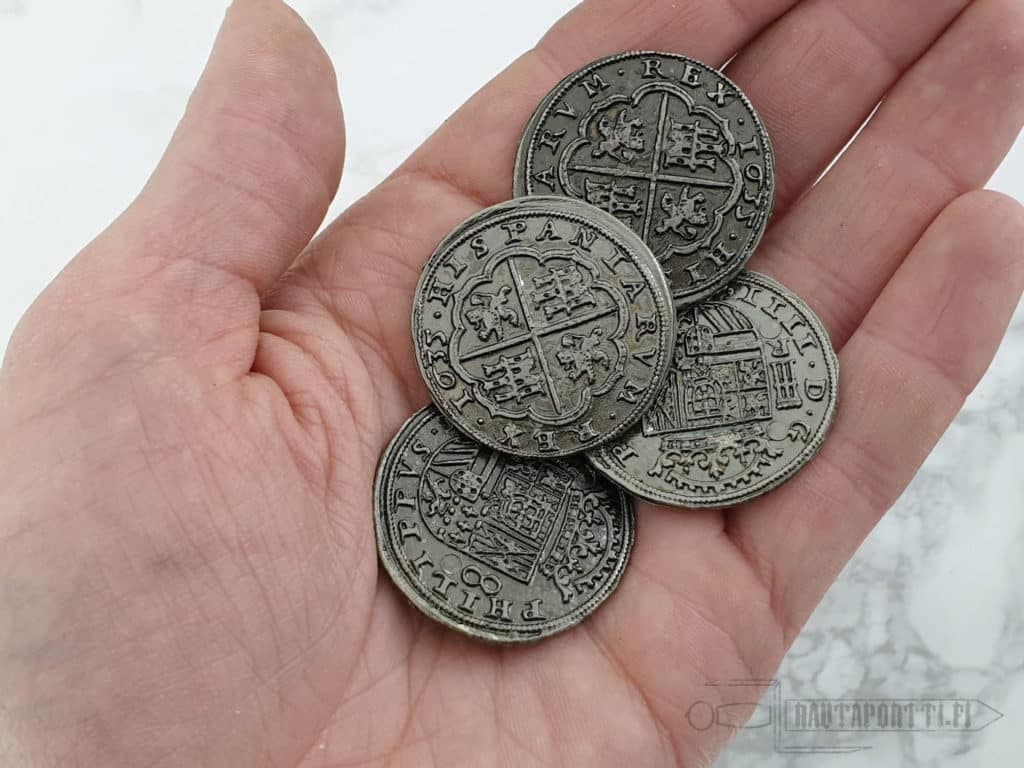
There is a very good chance that the American dollar has an ancestor sitting in a coin cabinet somewhere.
It is silver.
It is Spanish.
It weighs roughly twenty-seven grams.
And for centuries, people across enormous parts of the planet knew what it was worth.
The Spanish eight-real coin, better known as the piece of eight or Spanish dollar, became one of the most widely accepted coins in world history.
The Smithsonian describes the Spanish eight real as so widely used across the Americas, Europe, Asia and Africa that it is considered the world's first global currency.
That is a spectacular claim.
And it deserves a spectacular explanation.
Because the Spanish dollar did not become global because Spain simply announced:
“Congratulations, everyone. This is now the world's money.”
That is not how monetary globalization works.
The Spanish dollar became global because silver from the Americas entered a network of trade routes connecting continents.
The coin travelled.
Merchants trusted it.
Governments accepted it.
Markets priced things in it.
And suddenly a piece of silver struck in the Spanish imperial system could end up being useful thousands of kilometres from where it was made.
That is globalization before globalization had a name.
Start with the silver
The story begins in the Americas.
Spanish colonial expansion brought enormous silver resources into the Spanish imperial economy.
Mines in places such as Mexico and Potosí became major sources of silver.
That silver was transformed into coin.
The result was an enormous supply of standardised silver money.
And that supply mattered because money has a physical problem.
You cannot manufacture international trade out of confidence alone.
You need something people can actually transfer.
Silver was ideal for this role because it was valuable, durable, divisible and recognisable.
The Spanish monarchy had access to an extraordinary supply.
The world had demand for silver.
The result was explosive.
The eight-real coin was big money
The eight-real coin was worth eight reales and became the great silver trade coin of the Spanish empire.
The Smithsonian describes examples from Mexico and other Spanish colonial mints and notes their role in international trade.
This was not pocket change.
It was a high-value silver coin.
And its size made it useful for major transactions.
But there was a problem.
What do you do when the transaction is smaller than one piece of eight?
You cut it.
Literally.
The coin was cut into money
This is one of the most charmingly practical things about Spanish dollars.
People could physically divide them into pieces.
The Smithsonian notes that colonists cut Spanish silver coins into smaller pieces to make change.
This is where the famous expression “pieces of eight” becomes much less theatrical.
It was an actual monetary reality.
The coin could function as a large unit.
Then parts of the coin could circulate as smaller values.
The metal itself provided the underlying measuring stick.
That is a brutally simple solution.
No tiny denomination required.
Just silver and a pair of cutters.
The coin crosses the Atlantic
The Spanish Empire connected the Americas to Europe.
Silver moved across the Atlantic.
But that was only half the story.
The Spanish dollar also moved west.
And this is where the story becomes properly global.
The Manila galleon connected the Americas with the Philippines.
American silver crossed the Pacific.
It entered Asian trade networks.
And from there it could circulate much farther.
China had enormous demand for silver.
The Spanish dollar therefore became part of the monetary world of East Asia.
A coin made from American silver, under Spanish authority, could end up participating in Asian commerce.
Pause there.
That's insane.
And it is one of the clearest demonstrations that early modern trade was already genuinely global.
The coin did not care about borders
A government cares about borders.
A coin cares about acceptance.
That distinction is crucial.
The Spanish dollar could move because merchants did not need to love Spain to value Spanish silver.
They needed to trust the coin's weight and quality.
The Smithsonian notes that the uniform quality of Spanish silver reales helped make them popular for international trade.
This is the essence of commodity-backed international money.
The political origin matters.
But the material standard can matter even more.
Chinese merchants could use Spanish silver without becoming Spanish
This sounds obvious.
It is also incredibly important.
A global currency does not require global political control.
The Spanish dollar was accepted in places where Spain did not rule.
That is what makes it global.
A merchant in China did not need to become Spanish.
A trader in North America did not need to use Spanish law in every respect.
The coin's value could travel independently of the issuer's political authority.
Again:
trust travels farther than sovereignty.
That is a recurring theme in monetary history.
The famous American connection
The Spanish dollar also became deeply embedded in the monetary life of Britain's North American colonies.
The Smithsonian notes that American colonists used Spanish silver extensively and that the U.S. dollar was eventually based on the Spanish real.
That is a lovely example of monetary inheritance.
The United States did not invent its dollar in complete isolation.
It inherited a monetary environment in which Spanish silver dollars were already familiar.
The new American currency therefore entered a world where the Spanish dollar had already established a trusted unit of value.
The old coin helped shape the new currency.
And now we need to talk about the word “dollar”
The name itself is part of the story.
“Dollar” ultimately traces through European monetary terminology associated with the thaler.
Spanish dollars were widely recognised in English-speaking commercial environments.
The name survived even as political systems changed.
So when you hold a modern dollar today, you are looking at the descendant of a much older monetary conversation.
The symbol may be different.
The material is certainly different.
The monetary system is completely different.
But the historical vocabulary is still there.
Why was the Spanish dollar trusted?
This is where the methodology becomes useful.
Trust was not mystical.
It had physical foundations.
Weight
A standard coin can be weighed.
That provides an objective reference.
Silver
The coin's value was connected to a precious metal with international demand.
Consistency
Repeated production created familiarity.
Recognition
The design became widely known.
Divisibility
Coins could be cut into smaller portions.
Network effects
This is the really important one.
The more people accepted the coin, the more useful it became.
And the more useful it became, the more people wanted it.
That is a monetary feedback loop.
The chopmark problem
One of the coolest things collectors encounter on Spanish dollars is the chopmark.
A Chinese merchant or moneychanger could stamp the coin with a small mark after testing or accepting it.
The Smithsonian's example of an 1805 Mexican eight-real coin has Chinese chop marks and notes that these marks were used to check that the coin was made of the expected silver.
Think about what that means.
The coin arrives in China.
Someone tests it.
They stamp it.
Another person sees the mark.
The coin develops a history of trust.
The surface becomes an economic diary.
That is magnificent numismatics.
The “damage” is evidence.
Those little marks can tell you that the coin was not merely manufactured.
It was used.
A coin with fingerprints from the world
This is what makes Spanish dollars so emotionally powerful.
A European monarch may appear on the coin.
But the marks around that portrait can tell another story.
A merchant in Asia.
A moneychanger.
A colonial trader.
A local market.
A long-distance transaction.
The coin becomes a traveller's passport.
And suddenly the object is no longer just Spanish.
It is global.
The piece of eight becomes a network effect
Imagine two possible coins.
Coin A is beautiful but accepted by nobody outside one small region.
Coin B is familiar across half the known trading world.
Which one is more useful?
Obviously B.
And that is the core of the Spanish dollar's success.
It became useful because everyone else already knew it.
That is one of the oldest monetary network effects in existence.
Modern people talk about network effects as though they were invented by technology companies.
No.
Merchants discovered them centuries ago.
Money has always been social infrastructure.
But was it really the “first global currency”?
The phrase is useful, but we should be precise.
The Spanish dollar is often described by institutions such as the Smithsonian as the world's first global currency.
But “global currency” is not a perfectly precise technical category.
Earlier coins travelled internationally.
Ancient gold and silver circulated beyond their places of origin.
The novelty of the Spanish dollar was the scale and interconnectedness of its circulation in the early modern world.
It operated across Atlantic and Pacific networks and became deeply embedded in commerce in the Americas, Europe, Africa and Asia.
So the useful claim is not:
“Nobody before Spain ever used a foreign coin.”
That would be nonsense.
The useful claim is:
The Spanish eight-real became one of the first coins to function on a truly intercontinental commercial scale.
That is the historical phenomenon worth studying.
How collectors should approach a Spanish dollar
1. Identify the mint
Mexico City.
Potosí.
Lima.
Guatemala.
Other colonial mints.
The mint immediately gives the coin geographical context.
2. Identify the date
The date places it within a political and monetary period.
3. Identify the ruler
The monarch tells you which phase of Spanish imperial history you're looking at.
4. Study the design
The pillars.
The shield.
The legends.
The assayer's initials.
These are not decorative details.
They are identification evidence.
The Smithsonian's 1805 Mexican example, for instance, identifies the mint through the “M” and the assayer through the initials on the reverse.
5. Look for chopmarks
They can tell you about circulation and can be historically fascinating.
But do not assume every chopmark automatically makes a coin rarer or more valuable.
Context matters.
6. Examine the weight
A standard eight-real coin should make physical sense as an eight-real coin.
Weight is evidence.
The great irony of the Spanish dollar
Spain created an imperial monetary system.
But the coin's greatest achievement was escaping it.
The Spanish government wanted silver to serve its empire.
The world turned that silver into something bigger.
Merchants made it global.
Asian markets absorbed it.
American colonists used it.
European traders recognised it.
And eventually a new republic borrowed the monetary vocabulary.
The coin outlived the political circumstances that made it.
Again, the pattern appears:
the state creates the money; the market creates the reputation.
Why the Spanish dollar matters
The Spanish dollar matters because it demonstrates that globalisation is not a recent invention.
Long before telegraphs.
Long before container ships.
Long before central banks and electronic payments.
Silver was already crossing oceans.
And when it did, it carried information about:
mining,
empire,
trade,
war,
taxation,
commerce,
and trust.
The eight-real coin was one of the physical objects holding that world together.
It was not merely money moving across borders.
It was a common reference for value across borders.
That is a much more powerful idea.
And then the modern dollar arrives
Eventually the political world changed.
Spain's empire fragmented.
New states emerged.
New monetary systems appeared.
Paper money became increasingly important.
Gold standards and later fiat currencies transformed the meaning of money.
But the old Spanish dollar left a linguistic and monetary inheritance.
The modern American dollar emerged partly from this earlier monetary environment.
The old piece of eight did not survive unchanged.
Its influence did.
And perhaps that is the real definition of monetary legacy.
A coin does not need to remain in circulation forever.
It needs to leave behind a system people continue using.
The Spanish dollar did exactly that.
It crossed oceans.
It entered markets.
It was cut apart.
It was stamped.
It was weighed.
It was trusted.
It became global.
And then, slowly, the world built new currencies on top of its foundations.
The first global currency did not look futuristic.
It looked like silver.
And for several centuries, that was enough to make the world feel a little smaller.